Showing posts with label hurricane. Show all posts

Tuesday, June 18, 2013

From Wildfires to Hurricanes: Here's Why You Want SERVPRO


In the midst of of the drought-related wildfires that are devastating the West and the hurricane-induced water and wind damage hitting the East Coast, people everywhere are having to make tough decisions about where to go from here. Particularly in large-scale disasters, being taken advantage of is a threat that faces many homeowners. On the other hand, taking on fire and water damage cleanup yourself can be overwhelming and not entirely possible without the right equipment. So take it from a neighbor you can trust: here are 7 reasons to choose SERVPRO.
Timely mitigation is key to controlling damage, downtime and recovery costs. The  training of your local SERVPRO Franchise Professional will help limit damage and get your facility back in operation quickly. You can count on our nationwide coverage, full line of restoration services, and the 1-4-8 service guidelines.
They key to a good relationship is good communication. With SERVPRO, you'll know what is happening every step of the way. From the first telephone call within the first hour following damage notification, until the job is complete, we are dedicated to effectively communicating with you. You will be aware of the job status and the progress toward project completion.
Jobs are documented with itemized estimates, digital photographs, signed work authorization forms and regular progress reports. SERVPRO Franchise Professionals, utilizing technology developed for documenting insurance claims, electronically collect and store project information which is accessible to you via a secure e-mail link 24 hours a day. Upon project completion, a signed customer satisfaction form is the final piece of information entered into the file.
When fire, water or mold damage strikes a commercial facility, it has a negative impact on everyone -- the owner, the management team, employees, tenants and even customers. Even small fire or water damages must be addressed quickly in order to limit secondary damage. We understand the urgency in responding to your facility or home following a disaster. By arriving quickly, mitigating damage to the structure and contents, and providing effective cleanup and restoration services, we will get you back in business as soon as possible.
We help you save money: Emergency mitigation services help minimize secondary damages; proper restoration versus replacement of contents is less expensive; faster recovery lessens loss; pre-approved pricing and procedures; and comprehensive cleanup and restoration services help prevent future problems and potential liability risks.
Commercial properties probably have an emergency exit plan in place with illuminated signs leading occupants to safety and even facility maps strategically placed to identify alternate routes out of the building. But have you developed a thorough Contingency Plan? Is the emphasis on the first 24-48 hours, to help you get back in your building as quickly as possible?
Your local SERVPRO Franchise Professional can provide you assistance in developing an Emergency Response Profile. As part of a well-thought-out Contingency Plan, your Emergency Response Profile will contain information you need in the event an emergency situation occurs.
An added advantage to utilizing SERVPRO in the development of your Emergency Response Profile is the opportunity to coordinate a preferred provider relationship including pre-arranged pricing and procedures for handling emergency response for your facility before damage occurs.
We have the solution to your cleanup needs. Utilizing the right equipment and supplies, SERVPRO can handle all of your cleanup needs. In addition to our superior fire, water and mold restoration services, we provide cleanup services for those special needs that surpass the capabilities of your regular maintenance staff: Fire, Smoke and Soot Cleanup and Restoration; Water Removal and Dehumidification; Crime Scene, Biohazard and Vandalism Cleanup; Mold Mitigation and Remediation; Contents Claim Inventory Service; Air Duct and HVAC Cleaning; Carpet and Hard Floor Cleaning and Care; Stain Removal, Stain Resistance Applications; Odor Identification and Deodorization; and Upholstery and Drapes: Wet or Dry Cleaning Methods.
In the event of a major catastrophe, SERVPRO has a nationwide Large Loss Response Team comprised of trained and equipped professionals capable of responding to your facility. While most systems have a waiting list, you get priority service with SERVPRO. Call us today to find out how.
Each of SERVPRO's over 1,400 nationwide Franchises is independently owned and operated by trained professionals committed to providing the highest level of emergency cleanup and restoration services and customer satisfaction. What this means to you, the commercial property owner or manager, is that should fire, water or mold damage occur in one of your local facilities or a facility across the country, a SERVPRO Franchise Professional will provide quality professional service 24 hours a day, 365 days a year.


Wednesday, May 30, 2012

Pet Planning

Our pets aren't just pets--we consider them family members. That is why we always think of our furry friends!


In planning for hurricane season, do not forget your pets. If an evacuation is necessary, the Humane Society of the United States urges pet owners to make arrangements to evacuate their animals. Official shelters do not allow pets. If you have to evacuate, make other plans for your pets, such as staying with family, friends, veterinarians, or kennels in safe locations.


The following are some planning tips for pets, prior to an evacuation:
  • Be prepared to take your pets with you. Animals depend on us for their survival, much as children do. It could be days or possibly weeks before you are able to return home. This type of delay could cause the death of your pet by starvation or dehydration.
  • Identify your pet. Securely fasten a current identification tag to your pet's collar. It's a good idea to also attach a phone number of a friend or family member who is well out of disaster range to your pet's collar.
  • Be sure your pet's rabies and other vaccinations are current. Boarding kennels will require proof of these vaccinations before accepting your pet.
  • Photograph your pet. Carry a photo of your pet for identification purposes.
  • Transport your pet safely. Use secure pet carriers and keep your pet on a leash or in a harness.
  • Find a pet-friendly hotel. Because most emergency shelters do not admit pets, call hotels in a safe location and ask if you can bring your pet. If the hotel has a no-pets policy, ask the manager if the hotel can waive the policy during the disaster.
  • Foster your pet. If you and your pet cannot stay together, call friends, family members, veterinarians, or boarding kennels in a safe area to arrange safe foster care.
  • Have supplies on hand. Be sure to pack a week's worth of food, water, medication, cat litter, or any other supplies your pet needs on a regular basis.
  • Plan your evacuation and leave in plenty of time. Do not wait until the last minute to evacuate. When rescue officials come to your door, they may not allow you to take your pets with you.
  • Remember emergency responders are trained and required to save human lives, not animals. They may be taking physical and legal risks if they stop to help your animals.
  • Carry a list of emergency telephone numbers with you. This should include your veterinarian, local animal control, local animal shelters, the Red Cross, and any other individual or group you might need to contact during the disaster.
Content Credit: http://www.scdhec.gov/administration/ophp/hurricane/pets.htm

-Denea Duran

Tuesday, May 29, 2012

Hurricane Preparedne​ss Week

Are you prepared for a hurricane? What would you do? These are questions that you should have answers to because hurricane season is fastly approaching. This week is Hurricane Preparedne​ss Week and we will give you safety tips on what to do in case of an emergency!

Two keys to weather safety are to prepare for the risks and to act on those preparations when alerted by emergency officials. These are essential pieces to the Weather-Ready Nation.

Refer to the Federal Emergency Management Agency's (FEMA) ready.gov/hurricanes for comprehensive information on hurricane preparedness at home and in your community.


Gather Information-

Know if you live in an evacuation area. Assess your risks and know your home's vulnerability to storm surge, flooding and wind. Understand National Weather Service forecast products and especially the meaning of NWS watches and warnings.

Contact your local National Weather Service office and local government/emergency management office. Find out what type of emergencies could occur and how you should respond.

Contacts


Keep a list of contact information for reference:
Local Emergency Management Office
  • County Law Enforcement
  • County Public Safety Fire/Rescue
  • State, County and City/Town Government
  • Local Hospitals
  • Local Utilities
  • Local American Red Cross
  • Local TV Stations
  • Local Radio Stations
  • Your Property Insurance Agent


Image of an Example Disaster Supply Kit

Plan & Take Action


Everyone needs to be prepared for the unexpected. Your friends and family may not be together when disaster strikes. How will you find each other? Will you know if your children or parents are safe? You may have to evacuate or be confined to your home. What will you do if water, gas, electricity or phone services are shut off?

Supplies Kit


Put together a basic disaster supplies kit and consider storage locations for different situations. Help community members do the same.

Emergency Plans


Develop and document plans for your specific risks.


Evacuation

Image of Interstate Traffic in an Evacuation
  • Review the FEMA Evacuation Guidelines to allow for enough time to pack and inform friends and family if you need to leave your home. FOLLOW instructions issued by local officials. Leave immediately if ordered!
  • Consider your protection options to decide whether to stay or evacuate your home if you are not ordered to evacuate.

When waiting out a storm be careful, the danger may not be over yet...

Be alert for:

  • Tornadoes – they are often spawned by hurricanes.
  • The calm "eye" of the storm – it may seem like the storm is over, but after the eye passes, the winds will change direction and quickly return to hurricane force.

Recover

  • Wait until an area is declared safe before returning home.
  • Remember that recovering from a disaster is usually a gradual process.

Resources

Content Credit: http://www.nhc.noaa.gov/prepare/ready.php

-Denea Duran

Thursday, April 5, 2012

Inside the Hurricane Recovery Program


When nearly 4.5 million people needed help following Hurricanes Katrina, Rita and Irene, millions of individuals, foundations and corporations rose to the occasion. In just a few months, the American Red Cross was entrusted with nearly $2.2 billion to assist those affected. Hundreds of thousands of individuals and families looked to the Red Cross.  


The Red Cross has continued to support those devastated by the 2005 hurricanes through the Hurricane Recovery Program (HRP): a nationally-developed, locally-tailored initiative addressing the long-term needs of Hurricane Katrina, Rita and Wilma survivors. 


Working alongside local and national nonprofits and other partner agencies, the Red Cross ultimately helped tens of thousands of people obtain emotional support, create recovery plans and meet housing or occupational needs through the HRP services. Additionally, HRP built new partnerships and communities…ultimately empowering families and neighborhoods alike.


The Hurricane Recovery Program is a story best told by the thousands of families who received support – the thousands of faces that share equal parts grief and hope every day. It is often best told one story at a time.


-Denea Duran

Content Credit: redcross.org
Photo Credit: SERVPRO


Tuesday, February 21, 2012

Then and Now: New Orleans


First and foremost, let me start by apologizing to everyone. I have been absent in posting blogs last week because I went to New Orleans! Not only is the city rich in history but the people there are friendly and have great "southern hospitality". The food is not only amazing, but the people of New Orleans don't believe in portion control (Lets just say that I ate everything that I could get my hands on!)


Tip: New Orleans is known for their amazing praline candy. If you get a chance to head to New Orleans, you must STOP whatever your doing and try praline candy!  

I not only went down to New Orleans for pleasure, but I really wanted to take away a better understanding of the history of the city-- both before and after Hurricane Katrina. I think it is amazing how some of the homes and structures destoryed in 2005 look as if the hurricane had just made landfall. They are still boarded up and the water lines are still evident.

During my trip I got to speak with a few locals about the hurricane. Hearing them reminisce about that day, I was struck by the number of people who continue to hold positive attitudes following the event. Many even considered themselves blessed.

Before I left New Orleans, I met a business owner that lost his small business permanently. As we walked past his boarded up shop to the next stop of our vacation, I could feel my heart sink. It is amazing how a natural disaster can change your life forever.


My job here is to give you safety tips, but to be honest nothing can prepare you for a life-changing natural disaster. What I took away from my trip is that it is essential to stay positive through whatever is handed to you. And I thank the people of New Orleans for teaching me about courage and faith.

We will continue to keep the people and city of New Orleans in our prayers!

-Denea Duran


Wednesday, August 24, 2011

Hurricane Jargon: Know the Terms

Tropical Depression
An organized system of clouds and thunderstorms with a defined surface circulation and maximum sustained winds of 38 MPH (33 knots) or less. Sustained winds are defined as one-minute average wind measured at about 33 ft (10 meters) above the surface.

Tropical Storm
An organized system of strong thunderstorms with a defined surface circulation and maximum sustained winds of 39–73 MPH (34–63 knots).

Hurricane
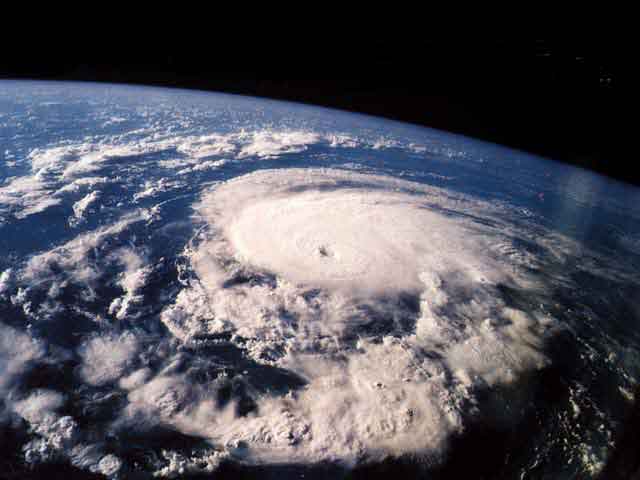
An intense tropical weather system of strong thunderstorms with a well-defined surface circulation and maximum sustained winds of 74 MPH (64 knots) or higher.

Storm Surge
A dome of water pushed onshore by hurricane and tropical storm winds. Storm surges can reach 25 feet high and be 50–1000 miles wide.

Storm Tide
A combination of storm surge and the normal tide (i.e., a 15-foot storm surge combined with a 2-foot normal high tide over the mean sea level created a 17-foot storm tide).

Hurricane/Tropical Storm Watch
Hurricane/tropical storm conditions are possible in the specified area, usually within 36 hours. Tune in to NOAA Weather Radio, commercial radio, or television for information.

Hurricane/Tropical Storm Warning
Hurricane/tropical storm conditions are expected in the specified area, usually within 24 hours.

Short Term Watches and Warnings
These warnings provide detailed information about specific hurricane threats, such as flash floods and tornadoes.

*Terms courtesy of http://www.fema.gov/

*Photo credits:

https://blogger.googleusercontent.com/img/b/R29vZ2xl/AVvXsEgXqxbyELC7_A5Dh6XobQ0_uGa3TUNDNUzTnS-BnAuh_8ZOkruG5kiWkf9rg-p_FY8AjN12-K8TzQe1va_FeoK4bS8oBWJtNeD6sHtTWgUs9jL_47UX5bGl1PuFKFIPEJyq5I_Lqqt85QI/s1600/hurricane_katrina.jpg

http://weathersavvy.com/hurricane_bonnie_OPT.jpg

http://www.worldaffairsboard.com/attachments/multimedia-jukebox-room/7616d1175836440-hurricane-katrina-revisited-19d25df.jpg